

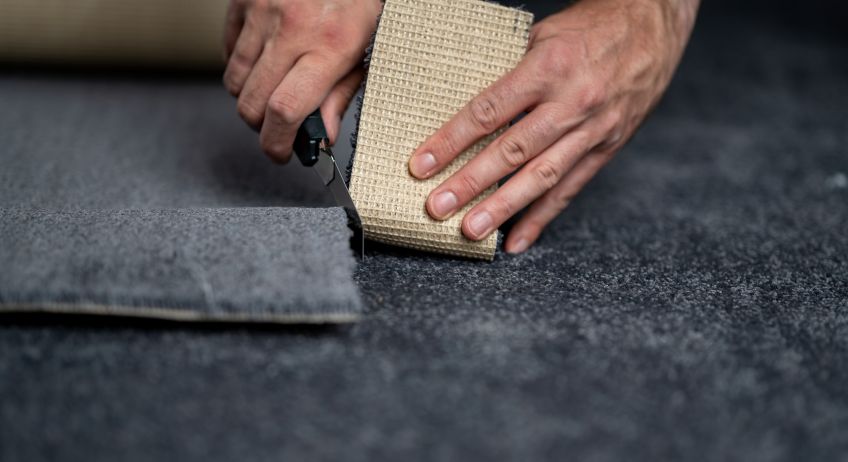
Replacing a floor later in life may have little to do with age itself. Perhaps you’re tired of cleaning a hallway carpet, want a warmer bedroom or are adapting a room for someone who uses a walking aid. Laminate and carpet both have advantages, but the better choice can change from one room to another.
The questions are practical. Which surface feels steady underfoot? How much cleaning will it need? Will changing the floor create an awkward threshold? Thinking about these details before choosing a colour or pattern can help you avoid a floor that looks attractive but doesn’t suit your everyday routine.
Which Feels Steadier Underfoot?
Carpet offers a softer surface, while laminate is firm and generally has less give. Neither is automatically safer, particularly if balance, vision or mobility are concerns.
Smooth laminate can become slippery when wet, and walking across it in socks may reduce grip. Carpet presents different problems. Loose edges, wrinkles and thick pile can make walking more difficult, especially if you tend to shuffle your feet.
There are three things worth checking before making a decision.
• Surface grip. Look for product information about slip resistance rather than assuming a matt or textured finish is safer.
• Carpet pile. A shorter, firmer pile is generally easier to walk across than a thick, soft one.
• Floor transitions. Raised edges between rooms can create trip hazards regardless of the materials involved.
If your hallway carpet has become difficult to clean, don’t choose laminate on appearance alone. At Urmston Carpets in Greater Manchester, you can discuss which laminate flooring finishes suit a frequently used entrance and ask for the manufacturer’s information on moisture resistance and slip resistance before deciding. The retailer can also introduce an independent fitter on request to assess the subfloor and doorway transitions.
What If You Use a Walking Aid?
The difference between the two surfaces becomes more noticeable when you use a walking frame, rollator or wheelchair.
Firm, level flooring often makes wheeled movement easier. Thick carpet can increase rolling resistance, while a deep pile may catch the feet of someone who walks with a shuffling movement.
Laminate avoids the resistance of a deep pile, but the surface still needs appropriate grip. A hard floor that becomes slippery under certain conditions isn’t necessarily the better choice.
Consider the type of aid and how you move around your home.
• Wheeled walking frames. Look for a firm, even surface without raised joints or loose coverings.
• Walking sticks. Check that the tip grips reliably on the intended flooring.
• Wheelchairs. Pay particular attention to carpet resistance, doorway thresholds and room-to-room transitions.
For someone already having difficulty moving around the house, changing the floor may be only part of the solution. Furniture layout, lighting and doorway access can matter just as much.
If mobility is a significant concern, an occupational therapist can help assess which changes would be useful in your particular home.
Which Is Easier to Clean?
Laminate generally requires less intensive routine cleaning than carpet. Dust and crumbs are easy to see and remove with a suitable brush, vacuum cleaner or microfibre mop.
However, laminate isn’t maintenance-free. Some products are vulnerable to moisture entering the joints, so it’s important to follow the manufacturer’s cleaning instructions. Excess water and unsuitable cleaning products can damage the floor.
Carpet needs regular vacuuming to remove dust and debris from the pile. Spills may require prompt treatment, and some stains are more difficult to remove than they would be from a hard surface.
Your preferred cleaning method can help settle the comparison.
• Laminate. May suit you if you prefer light sweeping and occasional damp cleaning.
• Carpet. May be practical if you’re comfortable using a vacuum cleaner and dealing with occasional stains.
• Busy entrances. Consider how you’ll manage wet shoes, mud and the need for frequent cleaning.
It’s also worth thinking about the equipment you use. A lightweight vacuum may make carpet maintenance manageable, while a floor that needs frequent mopping might not suit someone who finds bending difficult.
How Do Warmth, Noise and Comfort Compare?
Carpet usually feels warmer against bare feet and helps soften footstep noise. These qualities can be particularly welcome in bedrooms and upstairs rooms.
Laminate tends to feel cooler to the touch and produces a different sound when walked on. Suitable underlay can reduce some noise, although the result depends on the product and the building’s floor construction.
Comfort is also personal. Some people prefer the cushioning of carpet when walking around the bedroom. Others prefer the firmer feel of laminate, particularly when they find deep carpet difficult to move across.
A few considerations can help.
• Bedrooms. Carpet may appeal if warmth and softness are priorities.
• Upstairs rooms. Consider footstep noise and any restrictions on hard flooring, especially in a flat.
• Underfloor heating. Check the flooring manufacturer’s compatibility requirements and any limits on the combined thermal resistance of carpet and underlay.
Neither material guarantees a warmer room or a quieter home. Existing insulation, underlay and floor construction all influence the result.
How Do Installation Costs Compare?
The cost of the material is only part of a flooring project. Removing the existing covering, preparing the subfloor and finishing doorways can all affect the overall expense.
Laminate often uses a click-together installation system over a suitable underlay. The subfloor must meet the product’s requirements for levelness, stability and moisture.
Carpet usually requires its own underlay and fitting materials, with preparation depending on the existing floor and the selected carpet.
When comparing quotes for laminate flooring and fitting against carpet installation, establish what each quotation covers.
• Preparation. Does the existing subfloor need repairs, levelling or moisture investigation?
• Materials. Are the appropriate underlay and finishing accessories included?
• Doorways. Will changes in floor height require threshold trims or adjustments?
• Removal. Who will lift and dispose of the old flooring?
Neither option is always the less expensive choice. A laminate floor requiring substantial preparation may cost more overall than expected, while carpet with a suitable underlay and more complicated fitting requirements has its own expenses.
Ask a professional fitter to assess the room before finalising the order, especially in an older property where the condition beneath the existing flooring isn’t clear.
When Might Neither Be Worth Replacing?
Before buying either flooring type, consider whether a full replacement is necessary.
A securely fitted carpet that’s still in good condition might benefit from cleaning rather than replacement. Similarly, minor cosmetic wear on laminate doesn’t automatically mean the entire floor needs changing.
There are also situations where neither material is the best choice.
• Wet rooms and bathrooms. A flooring product specifically designed for wet conditions, with suitable slip resistance, is often more appropriate.
• Damaged subfloors. Persistent damp, structural damage or severe unevenness needs addressing before a new floor is fitted.
• Significant mobility difficulties. A home assessment by an occupational therapist may identify more useful changes than replacing one floor covering, particularly if moving safely between rooms has become difficult.
If your main concern is a loose rug, poor lighting or an awkward doorway, dealing with that problem may be more effective than replacing an otherwise sound floor.
Which Should You Choose for Your Home?
Carpet may suit you better when warmth, cushioning and reduced footstep noise matter most. Laminate deserves consideration when you prefer a firm surface and a simpler cleaning routine, provided its grip and moisture suitability meet the room’s needs.
The decision shouldn’t be based on age alone. Think about your usual footwear, any walking aids, how often you clean and whether the proposed installation will affect thresholds between rooms.
Start by inspecting the existing floor and taking samples home. Check the manufacturer’s specifications and ask a professional fitter about preparation, underlay and finishing details before ordering.
The best choice is the one that works with your home and your everyday habits, without creating new difficulties in the process.