
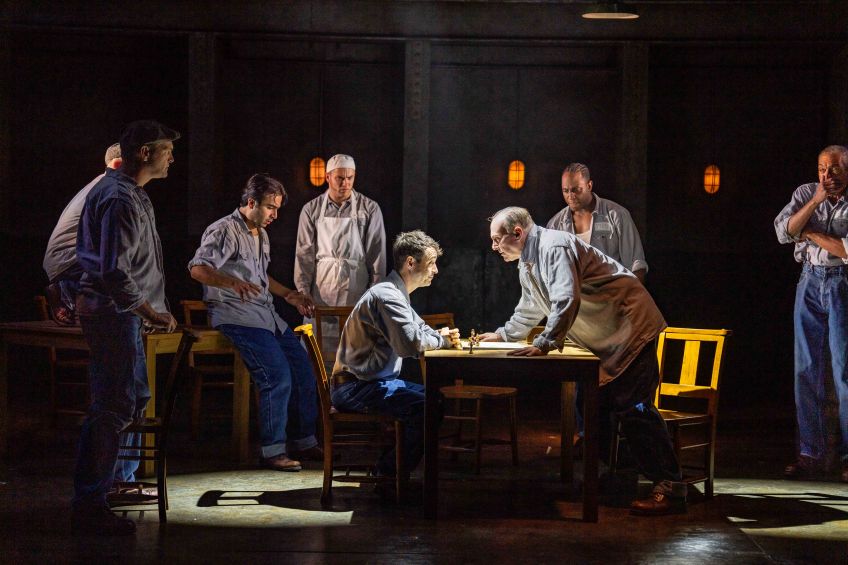
Adapted from Stephen King’s 1982 novella, Rita Hayworth and The Shawshank Redemption, so excellent was the engrossing 1994 film, starring Tim Robbins and Morgan Freeman, that it was nominated for seven Academy Awards. Adapted then by Owen O’Neill and Dave Johns it took to the stage in 2009, undergoing various re-writes since.
The compelling tale sets out the horrendous ordeals, survival strategies and ultimate victory of mild and gentle erstwhile banker, Andy Dufresne, an innocent man, wrongly incarcerated for two brutal murders in the unrelenting horror of maximum-security prison, Shawshank. Violence, brutality, bullying, corruption, depravity and danger are the relentless order of every day, yet the tale celebrates, above all, the overriding power of friendship, resilience, and steadfast, uplifting hope, elements that play out magnificently in the film and to a lesser degree in the stage version, where some aspects and resolutions of plot are rather unsatisfactorily glossed over.
Lending splendid charismatic charm and backbone to this production is Ben Onwukwe as narrator and long-term inmate Red (Ellis Redding). Speaking intimately and matter-of-factly to the audience, his earnest, assured tone is also relaxed and amiable, delicately edged with hints of wonder, admiration, bemusement, disgust or sorrow.

Until the final scene, a claustrophobic, monotonous set holds blue-denim-clad prisoners and audience alike permanently inside the boxy confines of grey, regimented walls, topped by unreachable, opaque windows, fitted with ugly, dim lamps and gantry, and swirled at times in smoky mist. A few props come and go – chairs, tables, buckets and mops, library-book trolley, shelves and stepladder, a flimsy wall covered in posters and a bed for Andy’s cell, and a wooden panel, dark desk and chair for the warden’s office.
The violence, brutality and menace of the hardened criminals fills the stage, Ashley D. Gayle proving horribly scary as fiery, hot-tempered Rooster with his maniacal laugh while Sean Kingsley is suitably cruel, depraved and ruthless as his “girlfriend” and self-styled King, Bogs Diamond. In contrast, with lighter, humorous touch comes Samarge Hamilton in his portrayal of the gentler Rodriguez, full of religious zeal (until “let there be light” starts to puzzle him) while all hearts go out to the poignant tragedy of Kenneth Jay’s limping, arthritic old librarian, Brooksie, in prison so long there’s no way he’d ever cope with life outside of it.
The American accents work well for the most part though some disturbing vowels pop up in the wrong places from time to time and, much worse, a certain amount of mumbling and chewing on words mean some important dialogue gets lost. But there’s gruff-voice shouting a-plenty from assertive inmates, from strong, biased, heartless police guards and from Bible-spouting hypocrite, Warden Stammas (Bill Ward) so, so physically upright in his smart suit and self-righteousness but so, so crooked when it comes to tax fraud and cruel, unethical treatment of prisoners.
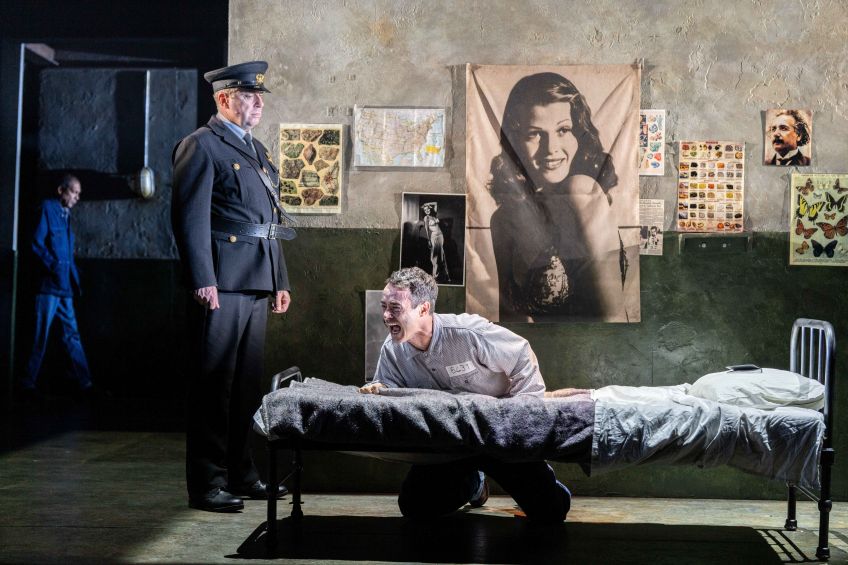
Joe McFadden’s portrayal of central character, Andy Dufresne, the quiet, patient, intelligent catalyst to what develops at the prison, is puzzling. Droopy-bodied, with shrinking slouch, hands dangling limp at his side, eyes and dialogue directed mainly at the floor, he has the appearance of a primary lad who’s just embarrassed himself rather than a former accountant and manager (albeit a cowed and depressed one) who harbours a strong, underlying determination to fight on and put things right. Like a lost, simple Stan Laurel, he looks frequently ready to burst into tears, while his smile, when it comes (possibly abetted by shadows?), like his eventual frenetic shouting, is somewhat spooky and alarming. That Andy is a bird with “feathers so bright and song so sweet” that he can’t be caged doesn’t come over at all and the chemistry in the bond of friendship with Red never gets to really gel. As a whole, though, the production works pretty well, with the main story well told, the prison and inmates well portrayed and the bleakness brightened by sprinklings of humour and bursts of fine hit records between scenes that mark the passage of the years until that final glorious victory arrives.
The cheers and thrilled, enthusiastic applause from some are counterbalanced by others saying, “Well, it was OK,” while not sounding too sure.
Eileen Caiger Gray