Joyce Glasser reviews The Last Spy (April 24, 2026) Cert. 12A. 107 mins. In cinemas & on demand
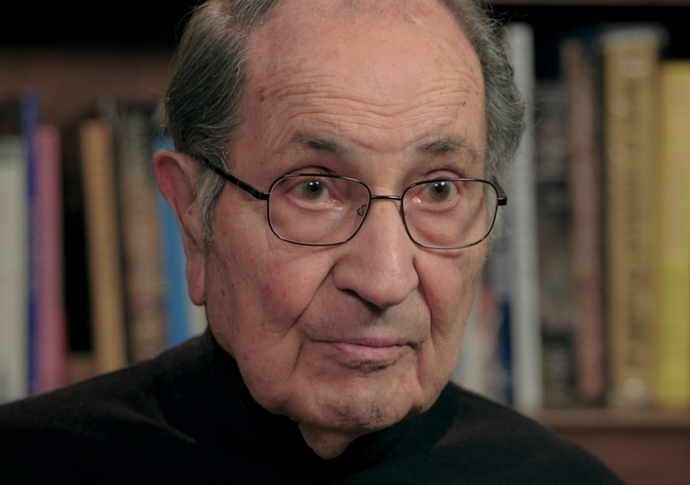
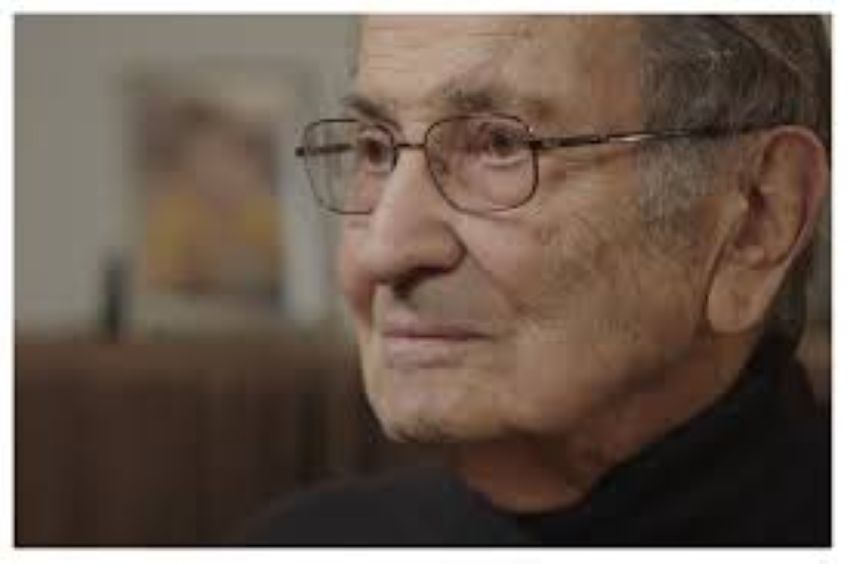
The puzzling title aside, writer-director Katharina Otto-Berntstein’s enthralling biographical documentary is an equally engrossing history lesson of WWII and post WWII geopolitics, ideologies and espionage. What’s more, the film is largely narrated by its then-100 year-old-subject, Peter Sichel, who has clearly been there and done that.
Peter died just before the release of the film here, knowing his urgent message would be his legacy, if – unlike many in the US government he served – people will only listen. As the potent ending comes full circle to the Sichel family’s origins, there’s a happier ending for Peter than for the profession he abandoned with regret and disdain.
Sichel enjoyed a privileged childhood in a well-off Jewish family in Mainz, Germany where his family ran an international wine business. He was in an English boarding school in the 1930s when his mother sensed Hitler’s direction long before her husband – and many Jewish families – who were in denial.
The family moved to Bordeaux, where Peter joined them when they were interned in a camp for Germans and Jewish refugees. When the Nazi’s invaded, the Sichels left for New York City, where they felt threatened by the Nazi-infiltrated America-First isolationist movement. That ended with the Bombing of Pearl Harbour in 1941 when 19-year-old Peter proudly enlisted in the U.S. Army.
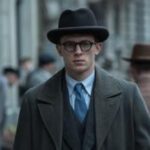
With his fluent French and desire to defeat Hitler, Peter was willing to be parachuted behind enemy lines to serve the French Resistance and provide intelligence. The US was almost alone amongst advanced nations in not having a peace time intelligence service. Roosevelt set up the Office of Strategic Services (OSS) which, at the start of the Cold War in 1947, was seamlessly transformed into the CIA.
Although he had only a high school education, Peter was a fast learner, good leader and extremely perceptive. He also believed in learning from his – and others’ – mistakes, a trait that set him apart from some famous names that Peter decries in the film.
These include Secretary of State John Foster Dulles, (“everybody in the CIA hated Dulles”), General Patton (“He was a very stupid man”) and General Eisenhower for his costly – in terms of human life and money – “roll back” strategy and enthusiasm for covert action, i.e., regime change. Sound familiar?
The list also includes Deputy Military Governor of Germany, Lucius D. Clay, who vehemently rejecting the value of intelligence, and Peter’s intelligence reports for years. He finally turned around when he could no longer ignore it the facts and is credited with the organisation of the successful Berlin Airlift of 1947-48.
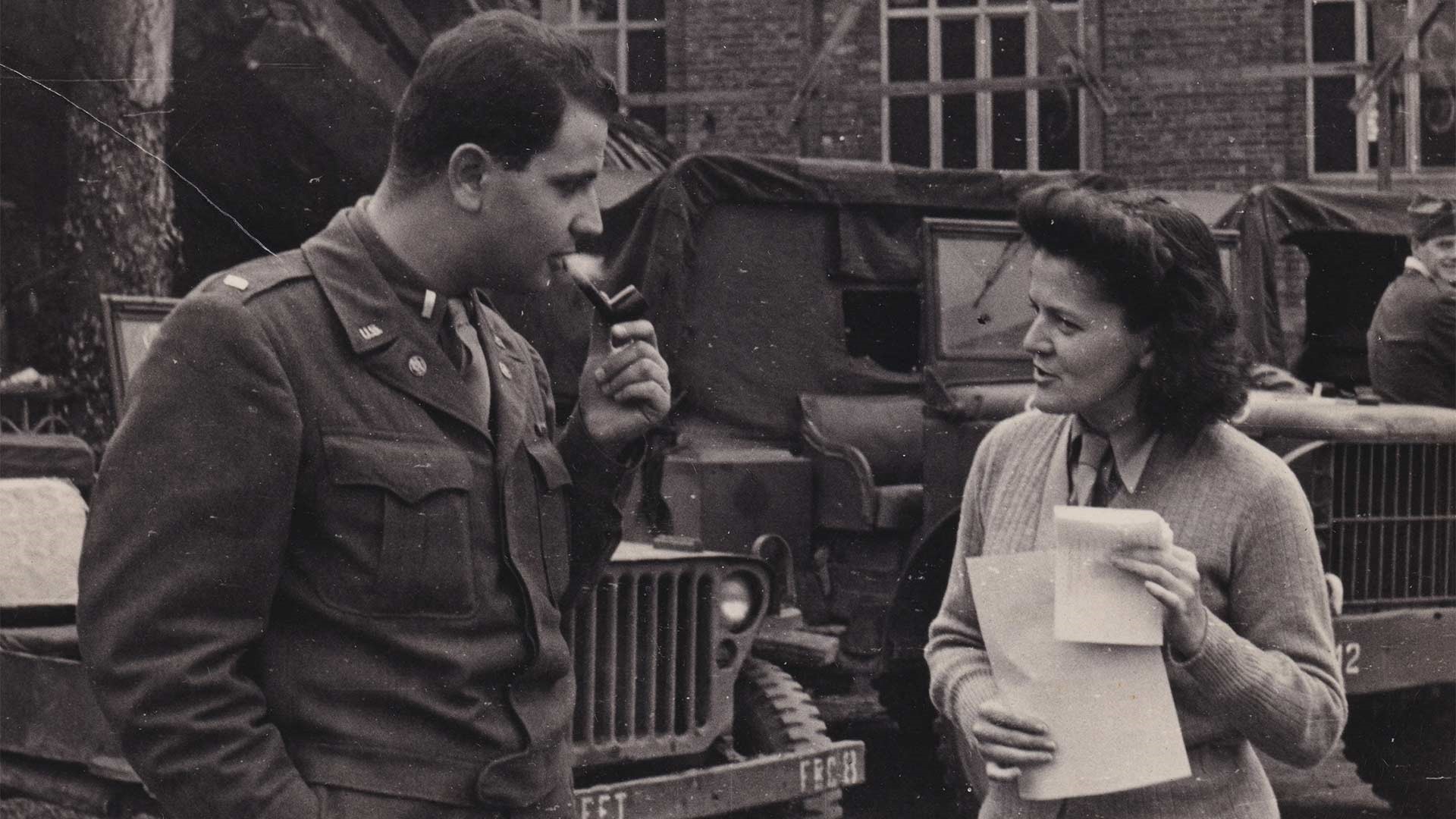
The story of Peter’s central role in post war Berlin is thrilling. While many in the OSS could speak French, few had Peter’s wartime experience, plus his native German, fluent French and English when Berlin was divided into French, British, US and Russian spheres.
Sichel arrived in Berlin on 1 October 1945 where Allen Dulles, the first civilian head of the CIA, and Richard Helms, the Deputy Chief of the OSS, asked him to take over a unit in Berlin. His salary of $6,478 (around $117,000 in today’s money). He was 23-years-old. When, shortly thereafter, Dulles and Helms returned to the USA Peter was put in charge of a combined OSS presence.
It was his intelligence that the Soviet Union were merging Socialist with Communist parties within Germany and across borders which led to his declaration that the Soviet Union was no longer an ally. His message fell on deaf ears until, with Churchill’s “an iron curtain has descended across the continent” speech, and Peter’s (dubbed the “Wunderkind”) speeches in Washington, the US government’s strategy changed.
Sichel condemns of the extremes to which people like John Foster Dulles and McCarthy took the Communist threat. In between Sichel’s discussion of this, and the politics of espionage, we get a primer of how operatives were recruited, tested and then, if any good, trained. Peter freely admits his mistakes and his Achilles Heel: women.
Meddling in other country’s politics was a necessary evil in the post war Italian elections where Peter supported infiltration to keep Italy out of the Communist block that had rapidly consolidated in the chaotic aftermath of WWII. But Eisenhower’s obsession with covert operations and regime change (the film is nothing if not timely) was not supported by intelligence, was counterproductive and cost too many lives.
Peter watched with dismay the disastrous US intervention in Guatemala from which the country has still not recovered. His outspoken views prompted a colonel to have Peter investigated by the FBI. Although he was cleared, he was not posted to Japan (when his accuser was Military Attaché). Sichel ended up in Hong Kong where he remembers the social life (a lot of wife and husband swapping) and a tumultuous political scene. He felt he was “losing reality living in a world of mirrors” and no foothold in the real world.
Burnt out, he retired after 15 years but was immediately missed and invited back. He did not go. Instead, still a young man, he returned to the wine industry where, in 1921 a brand called Blue Nun originated in his family’s business, H. Sichel Söhne.
Sichel’s spacious duplex in Manhattan’s upper west side and his beach house in the Hamptons were probably not the results of a generous military pension, but of his international marketing drive that made Blue Nun one of the top selling wines in the world from the 1950s through the 1980s.