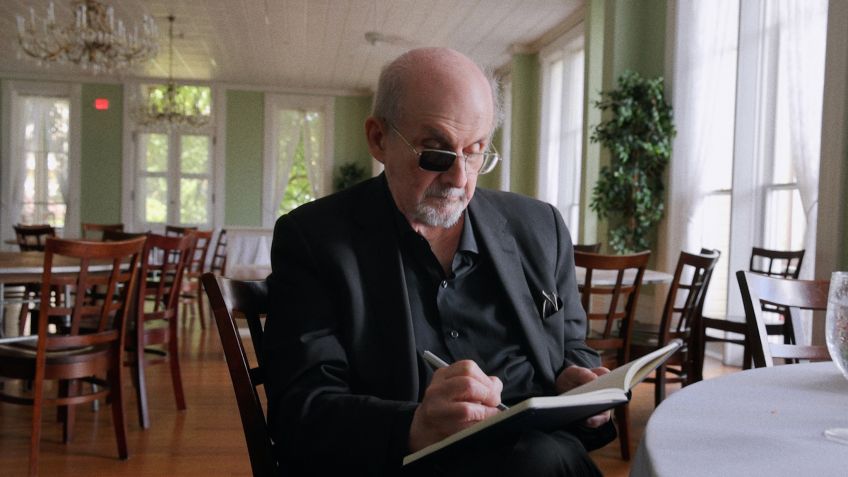
Knife: The Attempted Murder of Salman Rushdie (October 2, 2026) cert 15, 107 minutes.
You really have to see any documentary directed by Alex Gibney, including Knife: The Attempted Murder of Salman Rushdie. He gave us Enron: The Smartest Guys in the Room, Going Clear: Scientology; the Academy Award winning Taxi to the Dark Side and one of the hottest tickets at the London Film Festival this month, Musk. So it’s settled.
Knife might seem no more than an adaptation of Salman Rushdie’s memoir of the same title, but the first person narration, the thought-provoking reflections on religion, politics and freedom of speech and the often shocking visuals make it a powerful proclamation of the inalienable right to freedom of speech for all.
One of those unpleasant scenes comes early on when we see one of the most horrific images you are likely to see this year; almost too intimate to be in a film. Close-ups of a 75-year-old hospitalised patient with so many bruises, dark and red blotches, prominent stitches, bandages and tubes all over his body that he must be hovering on the edge of life and death.
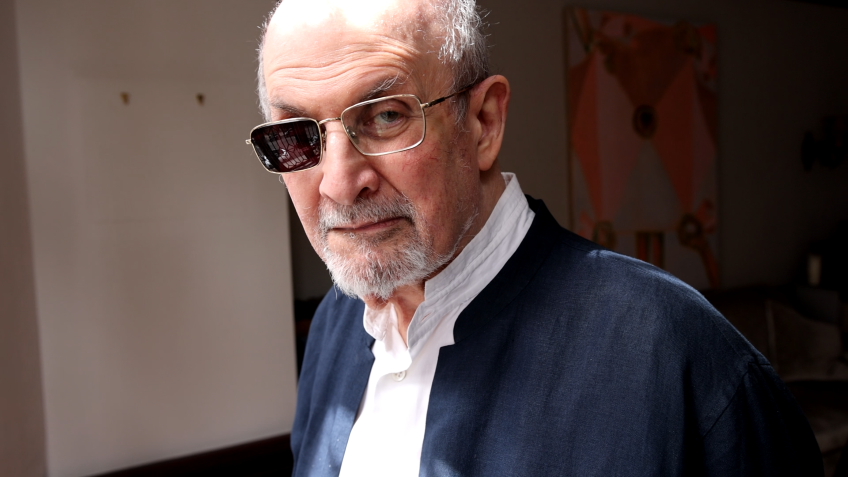
Most people would not pick up a camera and film a celebrated, courageous author in this exposed, vulnerable and precarious state, but the person filming is Rushdie’s fifth wife, 47-year-old novelist and poet Rachel Eliza Griffiths. She was to write The Flower Bearers, a memoir about grief and violence that overlaps with her husband’s memoir.
Rushdie’s previous marriages were to highly educated, professional women and lasted between three and eight years. Within a year of his marriage to Griffiths the traumatic event and the long recovery tested and it seems, strengthened them both.
The body of the film reviews Rushdie’s peripatetic, clandestine life since his 1988 novel, The Satanic Verses led to the famous fatwa of 1989. It’s the life of a fugitive, whose only crime was having written a novel that offended Muslims for what was seen by some to be an irreverent depiction of prophet Muhammad. As Rushdie continually reminds us, most of those who shouted loudest, killed translators and intimidated publishers had not read the book.
The 24-year-old attacker, Hadi Matar, who was sentenced to 25 years for the pre-meditated attack and for providing terrorist assistance to Hezbollah, had not read it.
The novel earned Rushdie cherished recognition but also a bounty of $3 million on his head. Think John Wick without the sexy body or martial arts and weaponry skills with a million lunatics out to get him. Think, too, of the pacificist intellectual who tells us: ‘I am from a secular Muslim Indian family. I have an Indian mind; a British mind and now, even an American mind.’ Rushdie, educated in the UK, moved to the USA in 2000.
One man who clearly never read the novel was Iranian supreme leader Ayatollah Khomeini whose fatwa was like a prison sentence on an innocent man. Anyone living in hiding loses a large chunk of their lives and livelihood.
The film has us imagining what it would be like to live in hiding for nine years. That’s already a high price to pay for writing a novel. But, surrounded by body guards and never knowing if today would be your last, is an equally high price.
The film traces Rushdie’s gradual emergence into public life nine years after the fatwa. Over time the strict security measures he followed were relaxed and we see him going to events, being involved in social circles and mingling with the public at these events. By 2022, he was travelling without security to his public appearances.
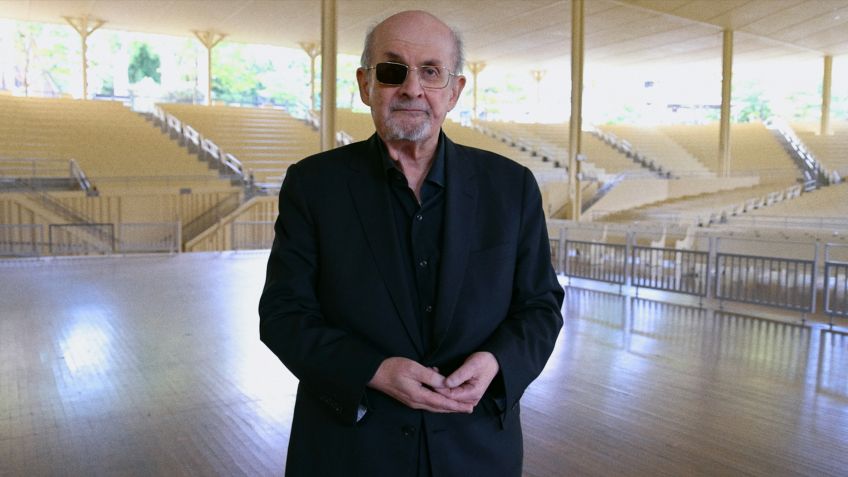
One of the many events on his schedule in the summer of 2022 was a talk at the Chautauqua Institution in Chautauqua, New York, where, ironically, Rushdie was to talk about the USA as a haven for exiled writers. He was to be interviewed by City of Asylum founder Henry Reese who, when intervening to separate the attacker from Rushdie, was stabbed himself. The government of Iran denied having foreknowledge of the stabbing, although state-controlled agencies of the Iranian media celebrated it.
The long road to recovery was like another period in hiding: another loss of life and productivity. Rushdie, however, refuses to let ignorance and intolerance win. ‘In any free society offence should never be a justification for censorship.’ He meditates on the ‘loss of his right eye and his left hand.’ The use of the hand will return. As for the loss of his right eye, he quotes his parents: “what can’t be cured must be endured.”
Personally, I could listen to Rushdie’s political and religious convictions all day but this film focuses on freedom of speech. During the long road to physical and mental recovery, he “thought a lot about the nature of the knife” and reflects: “Language, too is a knife. Language was a knife I could use to fight back.”
In his memoir, and with the help of Alex Gibney, he has done just that.