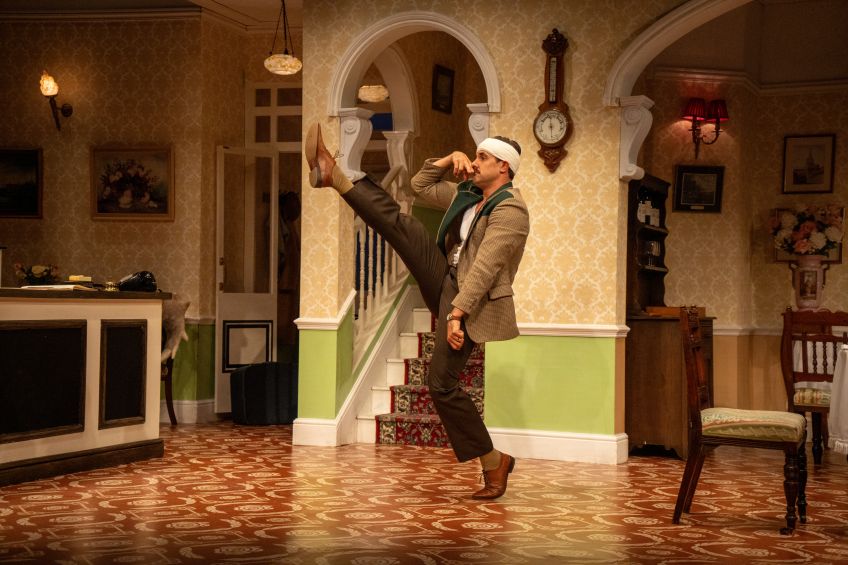
Onstage – the familiar reception area and entrance door of a certain hotel; to the right a staircase, and a dining area with neat, white tablecloths draped over round tables, with doors leading to an invisible kitchen. On the walls hang insignificant pictures and a barometer (and briefly, at one point, a moose’s head). Above is a small bedroom from which a deaf and demanding Mrs Richards cannot see herds of majestic wildebeest, while the fine frontage of a Torquay building is on display above that, along with blue sky and an odd-shaped sign that reads Fawlty Towers (and then Fatty Owls – though not, perhaps wisely, Farty Towels).
As the orderly, genteel music of a string ensemble strikes up with Dennis Wilson’s evocative theme, all is in place for a twisty, nostalgic trip, courtesy of Mr John Cleese, that takes us down various branches of Memory Lane that all lead to the same destination – chaos.
It’s over fifty years now since the first of Fawlty Towers’s twelve episodes was broadcast in 1975. Oft considered “the greatest British sit-com of all time”, the brilliantly crafted, original episodes have been skillfully pruned, reworked and integrated into a stage play by Cleese himself. Based mainly on three episodes with various nods to others, the stage version premiered in 2024 and is still delighting audiences of both older and considerably younger generations.
Physical and verbal farce, confusion and absurdity reign supreme as we take in (or out)… an in-grown toenail, a flutter on the gee-gees, frantic mimes from Basil to turn a Flying Tart into a Dragonfly, a particularly well-spoken moose’s head, a pig’s ear of a fire-drill, a fire with real smoke and flames, a deaf old bat, a blasting gun wielded by a batty major chasing a rat, men who are hotel inspectors – and men who are not, a bandaged head, The Germans, goose-stepping legs and several references to the war (that I think he got away with). Familiarity, though, far from breeding contempt, breeds hilarity, with warm raptures of anticipation accompanying build-ups to venerated lines such as, “I know nothing”, “Don’t mention the war” and “I’m sorry, I thought there was something wrong with you!”
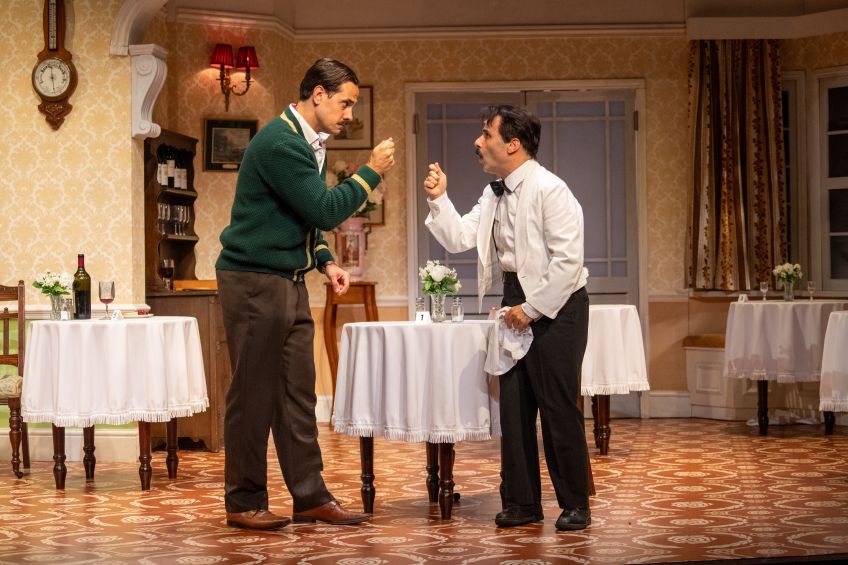
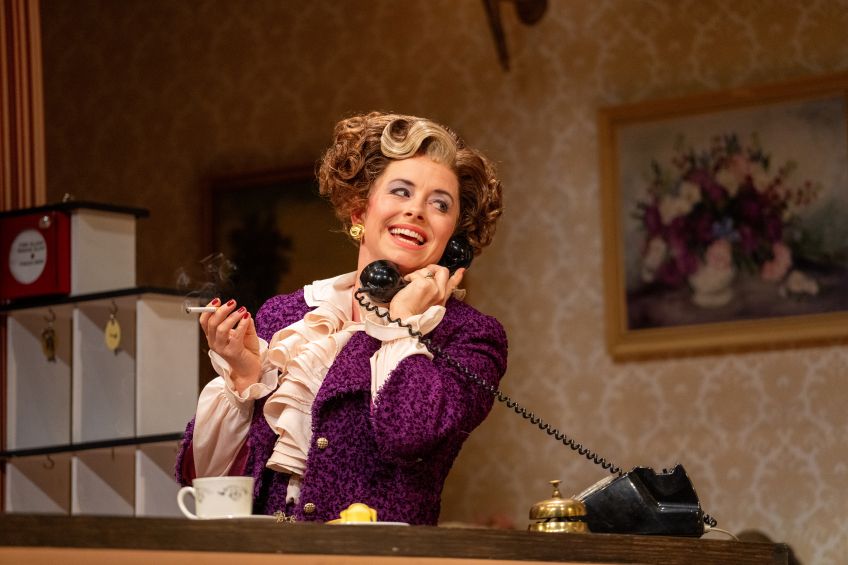
The stage is kept expertly full of life, especially at the busy beginnings of each act, as vibrant acting recreates the comings and goings-on of the so much-loved characters (20 or so characters appearing). Paul Nicholas is truly splendid as the endearing Major, always wondering if the papers have come yet, ever willing to help yet charmingly, hopelessly forgetful and no help to anyone at all. Jemma Churchill puts in a stalwart performance as the infuriatingly deaf Mrs Richards with her robust shrieks of, “What?” as she refuses to turn on her hearing-aid to save the batteries. Courtesy of Hemi Yeroham diminutive Manuel is full of smart, agreeable Barcelonian sparkle and chirp while Greg Haiste as Mr Hutchinson, a spoon salesman mistaken for a hotel inspector (the Bernard Cribbens’ role), makes an excellent job of his irritable fussing, whining and complaining. Joanne Clifton is the capable Polly while, standing in as cigarette-smoking, braying, sharp-tongued Sybil, Emily Winter keeps Basil in check, looking very much the part in her little suits and waistcoats, frothy blouses and nest-of-vipers hairdo. Danny Bayne’s self-delusional Basil, alternately angry and smarmily ingratiating, seems somewhat harsh and over-scary at first, but gradually, a warmer-edged frustration emerges thanks to fine script and character interactions and Bayne’s meltdowns into a gibbering, shrinking, weeping heap that then pulls itself together to continue irritating, insulting and infuriating everyone on the planet hit the mark nicely.
Of course, it’s nigh on impossible to perfectly recreate the original charisma and super-superb timing and delivery of the original cast, but verve, energy, talent and engagement keep enjoyment and laughter flowing all the way through this timeless comedy that still totally enthralls.
Eileen Caiger Gray