
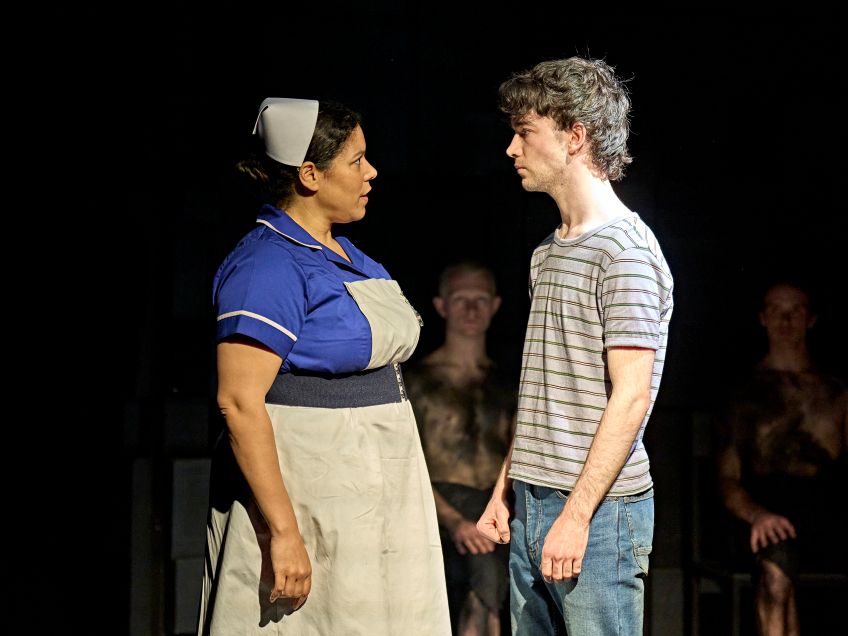
Peter Shaffer’s Equus premiered in 1973 and was an instant box-office success. Lindsay Posner’s production is its first London revival since 2007 when photographs of the naked 17-year-old Daniel Radcliffe in the lead role appeared in newspapers round the world. It was a big success all over again.
A semi-illiterate stable lad of seventeen blinds six horses with a metal spike. Why has he done such a terrible thing? The play is a gripping psychological detective story told in a series of short flashbacks.
Brought up by an over-religious mother, the boy replaces a picture of Jesus in his bedroom with a picture of a horse. He worships the stallion as if it were a god.
Can the psychiatrist make the boy normal again and what will the cost be emotionally? “Passion,” he points out, “can be destroyed by a doctor. It cannot be recreated.”
The psychiatrist, who has settled for a pallid, sexless existence, is jealous of a lad who has known a passion far more ferocious than he ever felt at any time in his life.
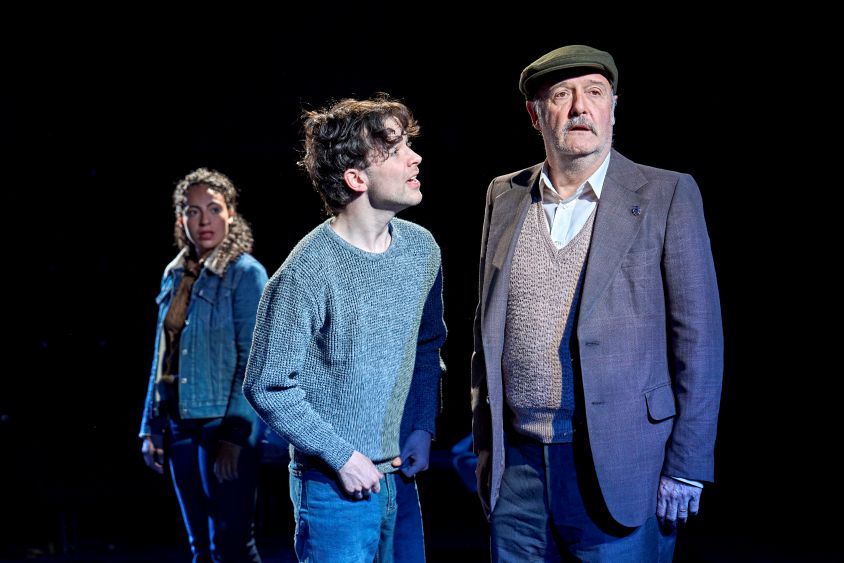
The play builds to two great climaxes: the first is a re-enactment of the boy’s naked, masturbatory midnight rides on the downs, when horse and boy become one. The relationship is homo-erotic. The second climax is a thrillingly theatrical re-enactment of the blinding,
Equus is both documentary and theatre. Posner directs a fine cast headed by Toby Stephens as the psychiatrist and Noah Valentine as the boy. Stephens is understated. Valentine is volatile and naked. Both characters are notable for their vulnerability. Emma Cunniffe gives a powerful performance as the boy’s mother. The production has a big emotional impact.
A major feature of the original 1973 production were the shimmering silver cage-heads masks and the metallic hoofs worn by the six actors playing the horses. Six dancers are now cast as the horses. They have no props and have to rely entirely on their bodies.
The muscular dancers, bare-chested, mime horse-like movements with their legs, knees, neck, face and turns of the head. The mimed sequences created by James Cousins are a major ingredient in this revival’s success.
To learn more about Robert Tanitch and his reviews, click here to go to his website.