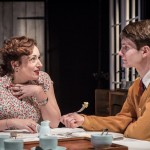
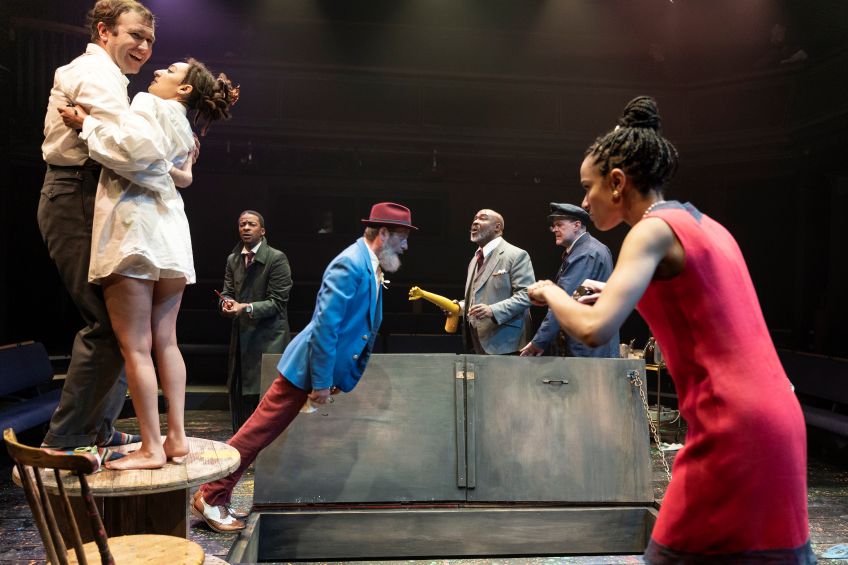
Peter Schaffer’s Black Comedy was originally seen at Chichester Festival Theatre in 1965 with Derek Jacobi, Albert Finney and Maggie Smith in a production by John Dexter. It became an instant classic, a farce, made memorable by a brilliant, inspired twist.
The action takes place in the dark. But so that the audience can see what is going on, the stage is brightly illuminated. Shaffer got the idea from a famous scene in a Peking opera which has two warriors fighting in the dark, totally invisible to each other but totally visible to the audience
A young sculpture and his fiancée are at home expecting a visit from a millionaire art collector when a fuse blows and plunges them into darkness. The sculptor has borrowed his absent next door neighbour’s furniture without permission. The fun is watching him returning the furniture in the dark when the neighbour unexpectedly comes back.
All the characters, which include his fiancé’s father, his ex-girlfriend, a genteel old lady and an electrician, have to grope about in the dark.
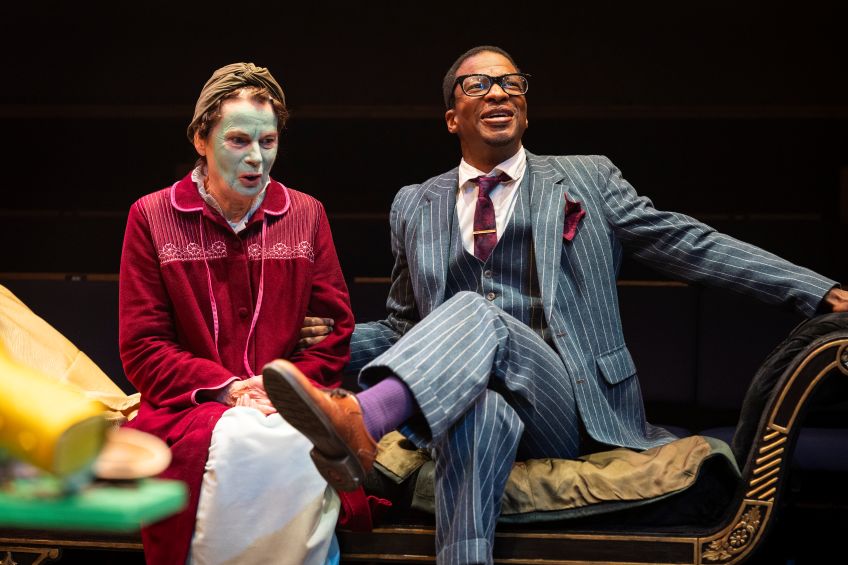
Black Comedy is considered one of the best English farces. Peter Shaffer is right up there with Georges Feydeau, the great French farceur, the daddy of modern farce, and in the same league as Ben Travers, Ray Cooney and Michael Frayn.
The play, nevertheless, has always had to rely on the dark/light reverse, the comic slapstick business and the comic personalities of the actors for its laughs.
The revival at the Orange Tree theatre is disappointing. The farce is no longer as hilarious as it once was. Caroline Steinbeis’s production is hampered by a lack of space and the stage being in the round. There is insufficient furniture. There is no staircase either, only a ladder. The audience is too close to the actors.
It would be good to be able to see Peter Schaffer’s first big success, Five Finger Exercise. It has not had a major revival since 1965.
To learn more about Robert Tanitch and his reviews, click here to go to his website.