
Joyce Glasser reviews Dead Man’s Wire (March 20, 2026) Cert 15, 106 mins. In cinemas (and later on SKY TV)
The American director Gus Van Sant is already 73, which is all the more surprising as he is still associated with his films from the late 1980s and 1990s: Drugstore Cowboy, My Private Idaho and Good Will Hunting. But that’s only if you forget that he directed the 2008 biopic Milk, which won two Academy Awards; and that he has just elevated the True Crime genre to a new level with the entertaining Dead Man’s Wire.
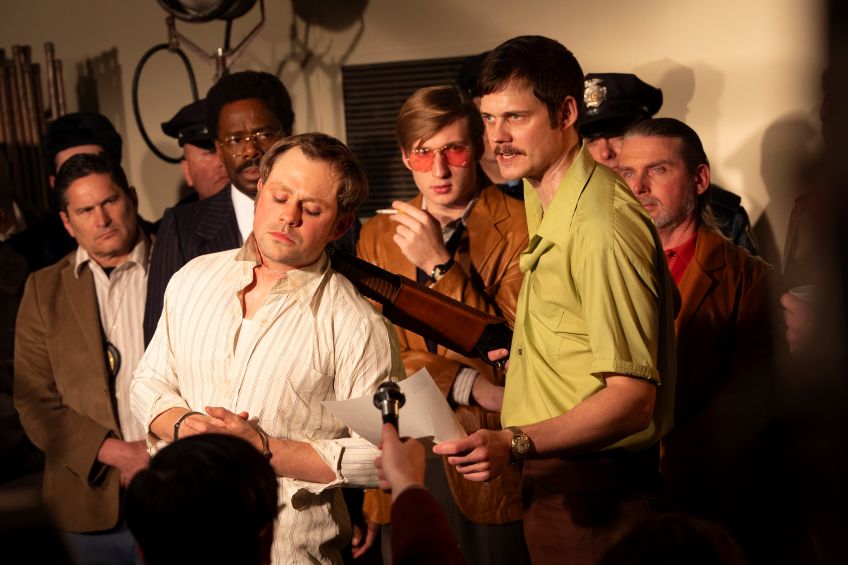
On Tuesday, February 8, 1977, Tony Kiritsis (Bill Skarsgård), a trailer park manager and former small arms instructor at West Point Academy, drove to the Meridian Mortgage Company in Indianapolis, Indiana for an appointment with the boss, M.L. Hall (Al Pacino). He sports a nasty moustache, a sickly green polyester shirt and is carrying a suspicious looking box – years before security checks became routine.
Instead of M.L., Tony is cautiously greeted by Hall’s son Richard (Dacre Montgomery) who explains that his father is on vacation. Indignant, Tony removes from the box a Winchester 1400 sawn-off 12-gauge shotgun. He wires it to Richard’s neck with a switch that is rigged to fire if anyone interferes with him or his hostage.
Tony demands that M.L. himself issue a formal apology, that the bank forgive his debt, and drop all charges against him. He also wants $5 million in reparations for a real estate loan on which he defaulted, prompting the bank to repossess the plot of land.
Tony had big plans to develop a shopping mall on the land and believes that the bank cheated him, determined to develop the land with another investor.
The police, helplessly stand back while Tony borrows a police car and has Richard drive them to Tony’s booby-trapped apartment where most of the action takes place.
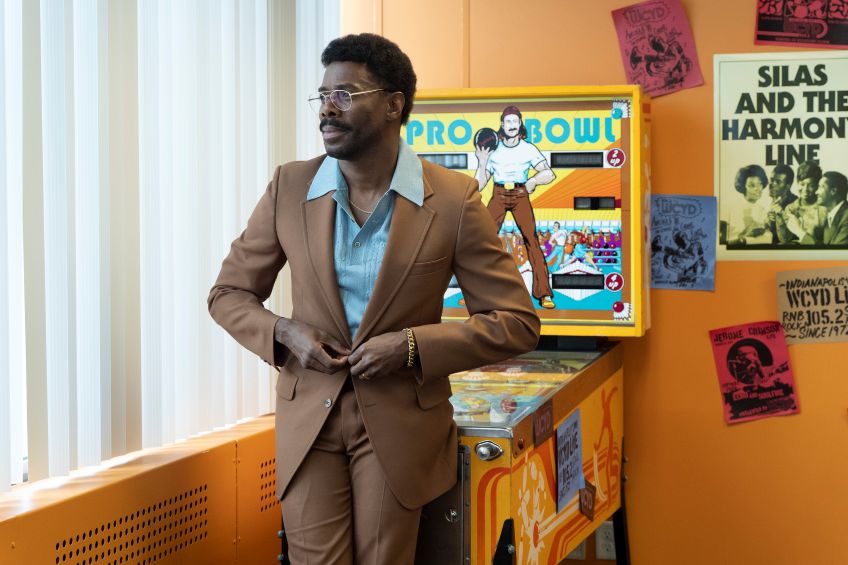
Tony lets Richard call his wife and Tony calls popular local radio DJ Fred Temple (Colman Domingo, terrific). Temple, after discussing the matter with the authorities, agrees to record Tony explaining his side of the story. As the authorities formulate a plan they let the recording be aired. It’s like the OJ Simpson car chase, being aired live: everyone is glued to their TVs.
Once in the relative safety of his flat, Tony shows a softer side and the two men converse on personal matters. But Richard is terrified of his kidnapper’s unstable nature.
Meanwhile, outside concerned parties on both sides (officials from the bank, the police, one of Tony’s brothers and a police detective who calls himself a friend) hold round the clock meetings to formulate a plan.
Scriptwriter Austin Kolodney, who researched the episode thoroughly and consulted with the makers of a 2018 documentary on the kidnapping, keeps the tension tight but since we know the outcome, it’s less a thriller than a commentary on society today.
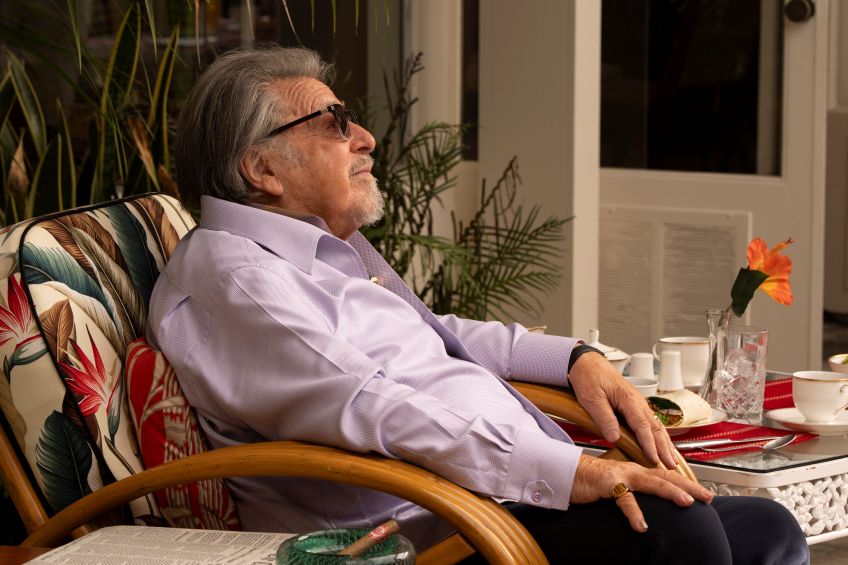
There is genuine humour drawn from the circumstances and characters. Perhaps the funniest scene features Richard’s phone call to his father (Pacino) stretched out on a sun lounge in Florida. Despite knowing his son’s situation, M.L. refuses to apologise “for something [he] didn’t do” or otherwise agree to Tony’s demands.
If the whole film has some similarities with the 1975 True Crime drama Dog Day Afternoon – which, starred Al Pacino – this scene is reminiscent of the 1986 comedy Ruthless People. In that hilarious movie, when millionaire Bette Midler is abducted by kidnappers, her gold-digger husband refuses to pay the ransom, leaving the victim to bond with the kidnapper.
The comic edge here is more chilling, and no bonding takes place. But Tony is so taken aback by M.L.’s cold-hearted conversation with his son that he feels sorry for Richard.
The filmmakers capture the chaos of the kidnapping which takes place in public. He includes an array of characters, all sketched in as individuals trying to avoid a tragedy.
Van Sant takes DJ Temple out of the office and gives him a reflective scene at home with his wife, as he grapples with a terrible responsibility. There’s even a sub-plot featuring the ambitious local reporter, Linda Page, (Myha’la) who stumbles across the scoop of the decade and refuses to let her thick-headed boss take over the story – once he realises it’s worth the air time.
Skarsgård – a member of the Skarsgård acting dynasty – and Montgomery are terrific, full of nuance in their demanding respective roles. Tony represents the hard working little man crushed by the system, the average guy who populist leaders exploit.
But what we miss is knowing whether there was any basis for Tony’s accusations and anger. After all, the mortgage company went bankrupt not long after this incident. We don’t know if it’s because Richard turned to alcohol to cope with the trauma, because investors got cold feet, or because the company was as dodgy as Tony claimed.