
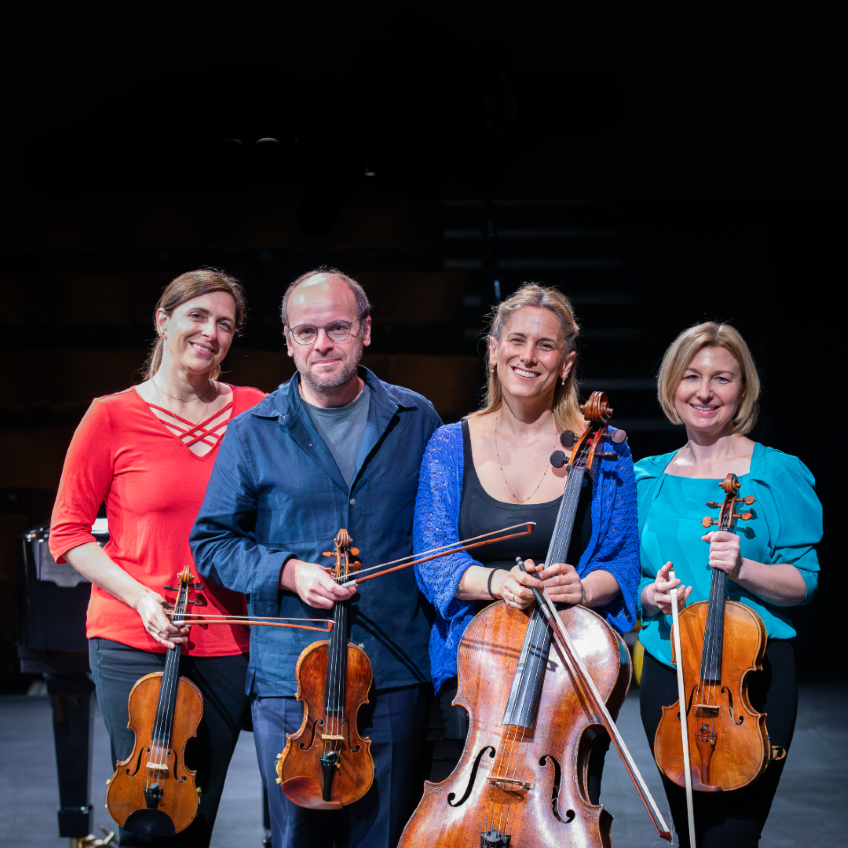
They say you can’t please all the people all of the time but, the passionate, world-class musicians of Ensemble 360 and their exhilarating programmes of music often come close.
Bringing exuberance to Doncaster this weekend was the ensemble’s string quartet combo. Earlier in the day, before an evening concert of Mozart and Beethoven string quartets and Benjamin Britten’s Three Divertimenti, came Music For Curious Minds, a fabulous hour of full-on inspiration. Bursting with mind-blowing music and top-rate musicianship, this close-up, intimate, in-the-round experience is designed for children, but it’s an entertainment so glorious it would thrill anyone of any age anywhere in the universe.
Magnifying-glass in hand, Detective Ellie, in deer-stalker hat and caped Sherlock coat, took charge of the proceedings brilliantly. With boundless enthusiasm, firm command, warm praise and constant encouragement, Ellie enlisted the help of the audience in investigating exactly what it is that goes into making perfect music. As evidence was compiled, astoundingly played musical excerpts were superbly integrated and alternated with audience contributions and chats with players, creating fun, interest, thoughtfulness and surprises all the way.
Via rhythmic clapping, simple singing, upbeat questions, answers and observations, music’s basic ingredients were closely examined – rhythm, dynamics, pitch, melody, harmony, mood and expression, the special, dramatic role of silences, playing techniques (like bowing, plucking and big-time, string-snapping slapping) and how players achieve togetherness in shaping and expressing the music through eye-contact, body language and breathing.
Mastering technical challenges galore, the musicians supplied glorious music all the way from a large range of different composers, playing with passionate expertise to illustrate each point. Clapped rhythms hailed Schubert’s Death and the Maiden; Beethoven backed up investigations into melody and harmony; Judith Weir aptly demonstrated the drama of silences while the dipsy-tipsy rhythms of Anna Meredith’s pizzicato piece, Short Tribute To A Teenage Fan-club demonstrated exactly why she needed to apologise to players if their fingers bled. Rich, captivating contributions came, too, from Mozart, Haydn, Josef Suk, Harry Burleigh and fabulous Dvorak, each one a particular treat. Thanks to the engaging, upbeat delivery of all the performers and the ongoing involvement of the audience, this supremely entertaining music-lesson gives music meaningful, heartfelt immediacy, so if countless future composers hail from South Yorkshire as a result it will come as no surprise.
The same musical ingredients and challenging techniques, so fervently demonstrated in the morning, were fired up again for the evening concert, each piece given much appreciated context and added interest in violinist Benjamin Navarro’s introductions.
Written when barely out of his teens, Britten’s engaging Three Divertimenti stun, amaze, exhilarate and take the breath away (though listeners in 1936 reacted a lot more icily). Full of inventive fireworks and intense, energetic momentum, they still sound pretty modern to our ears even now. Delicious blends and contrasts galore adorn the march, waltz and burlesque as exciting rhythms and textures, glissando tumbles and bends, soaring cadences, catchy tunefulness, strident declarations, sudden surprises, spiky plicks and plucks and colourful plunks propel and race us to fiery zeniths. Thrilling indeed.
With reassuring charm and familiar warmth and order, Mozart’s String Quartet in D K499 of 1786, The Hoffmeister, was next, named not after his favourite beer but after Mozart’s publisher friend. Plenty of familiar Mozartian phrase patterns and shapings, twiddly scamperings, echoes, repetitions and harmonious conversations between instruments create typical chirpiness, pleasing perkiness and playfulness while also visiting more earnest depths. Then, last up – an exhilarating journey to unknown destinations with ample surprises and challenges along the way. Beethoven’s Op 59 No2 was composed in 1806, the second-string quartet dedicated to Count Razumovsky, that pushes forward the string quartet form of Haydn and Mozart by writing new configurations for the instrumental parts. In a piece full of drama and contrasts we meet with halts and silences, strident, choppy outbursts, driving, ferocious crescendi and sparkling showers of falling notes, while we luxuriate, too, in absorbing, melodious contemplations of flow, flow, liquid flow. Tantalised by insistent, dancing repetitions of catchy Russian folksong phrases, we trot ever onwards through jaunty variations and fabulous instrumental interplays into a furious, flourishing gallop to the finish.
Captivating, passionate music both morning and evening? Lucky Donny!
Eileen Caiger Gray


