
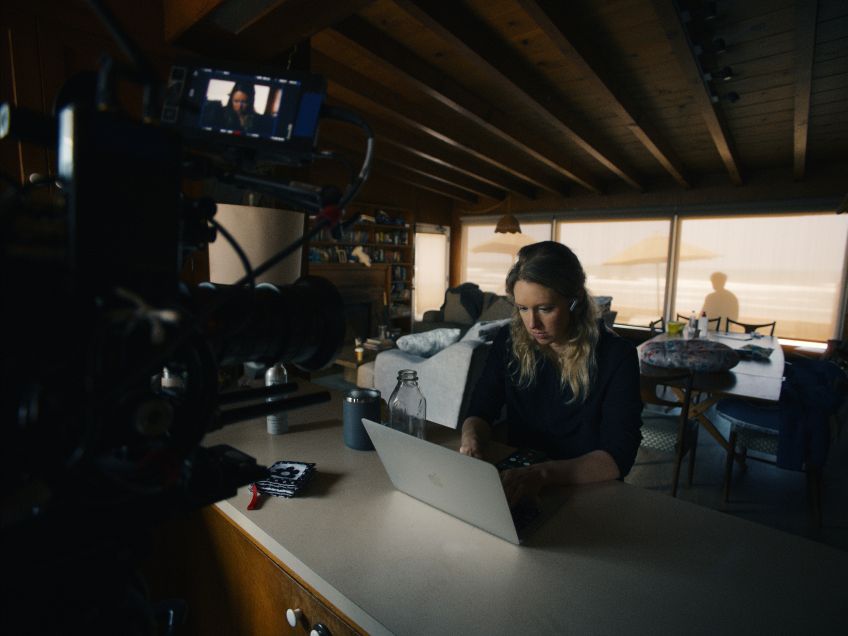
Joyce Glasser reviews You Can See Everything (November 20, 2026) Cert. 15, 174 minutes
American audiences were barely curious about the brilliantly acted and psychologically insightful drama The Apprentice, although it was the origin story of the country’s President. Nor were they interested in The Social Reckoning, Aaron Sorkin’s searing exposure and indictment of Facebook founder Mark Zuckerberg twenty-years after he launched the social network site. The apathy was despite the fact that 43% of Americans receive their news on Facebook/Meta.
But queues have been common across the USA to see comedian, actor, writer, producer, Nathan Fielder (digital series The Rehearsal, Nathan for You) and director Lance Oppenheim’s (Some Kind of Heaven, upcoming feature Primetime) nearly three-hour long documentary about the enigmatic university drop out turned entrepreneur Elizabeth Holmes.
It’s easy to see why. It captures the nation’s zeitgeist in its divisive battle about the truth. And it’s an entertaining true crime investigation like none you’ve ever experienced: at once hilariously funny, dark and menacing and as mind-bending as any Sci-fi film from Christopher Nolan.
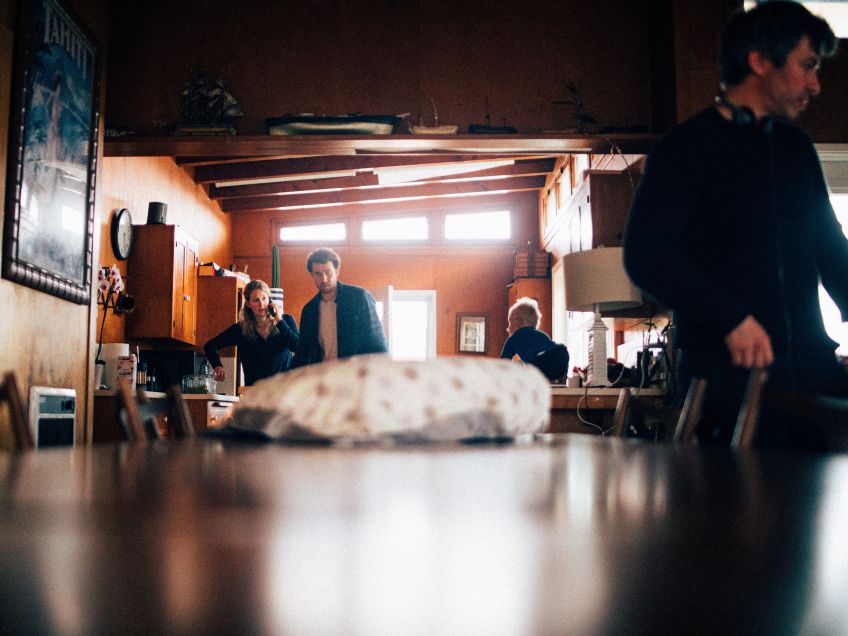
The film’s popularity is despite (or due to) the fact that Holmes’ story has been told in several formats, most famously in the television series The Drop Out starring Amanda Seyfried. Seyfried appears as herself (and as a Holmes stand-in) in the documentary with a performance to rival her Emmy-winning role in that series.
And this despite the fact that Holmes is currently serving time in the Minimum Security prison in Brayan Texas, where you can also find Ghislaine Maxwell.
In 2022, at the end of United States v. Elizabeth A. Holmes, et al., Holmes, the founder of the now-defunct health-technology corporation Theranos, was found guilty of multiple counts of wire fraud, along with her business and romantic partner, Ramesh “Sunny” Balwani. Both were ordered to pay billions in restitution.
The trial was high profile because from her modest beginnings in 2003 to 2014 when Holmes became the youngest self-made female billionaire in the world (without so much as a prototype product to show to investors), she was on magazine covers, posters and the subject of many articles. The board of directors of the attractive blond’s privately held company included three former U.S. cabinet secretaries, two former U.S. senators, a retired Navy admiral and a retired Marine Corps general.
On the day Holmes was to attend her first meeting of the Harvard Medical School Board of Fellows, she quietly resigned. A 2015 Wall Street Journal article spread like wildfire and Holmes quickly separated from Balwani. Then as Holmes’s dream became a nightmare, the then 33-year-old’s life took a surprising turn.
In 2017, shortly before Holmes was indicted by a federal jury, she went to a party and met Billy Evans, who, conveniently for the bankrupt accused, is the scion of a hotel empire. Despite the impending incarceration, in 2021 they had a son, followed, just after sentencing, by another child. Audiences will draw their own conclusions.
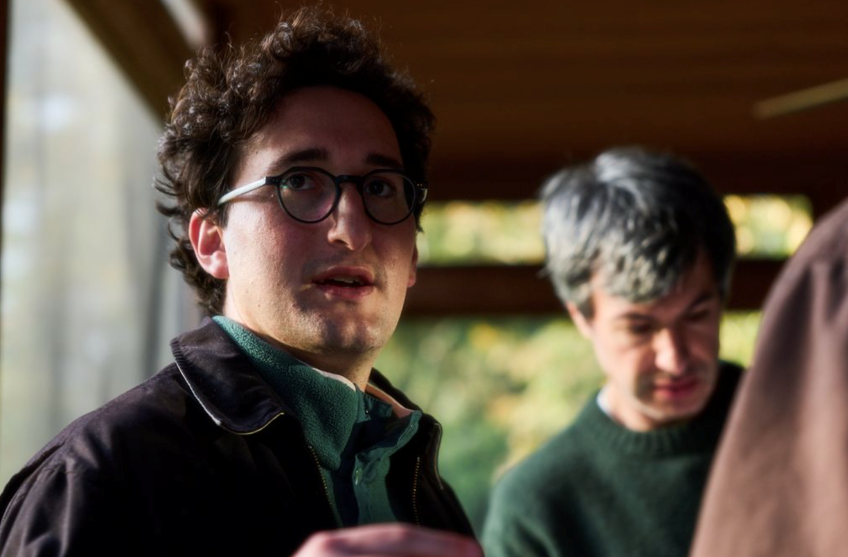
Cut to 2023, 34 days before Holmes would be driven to prison to begin her 11-year sentence (she is now due out by 2030), interviewer/co-director Fielder is sleeping in the guest accommodation of the couple’s California ocean front rental where he is joined daily by a 7-person crew that we glimpse a couple of times.
Since 2016 Holmes had not spoken to the media. Now, for reasons never divulged, the couple suddenly decided they wanted “transparent” coverage, presumably a chance for Holmes – who maintains complete innocence – to tell her story. The filmmakers are naturally sceptical: is this a self-serving stab at redemption or to garner sympathy and raise doubt about the soundness of the verdict?
The title, You Can See Everything, becomes loaded with irony about half-way through the film. On-camera interviewer/director Fielder starts to suspect that his vision is being obscured by Holmes and her new partner Billy Evans.
Not only is “Liz” as she is now called – wearing no make-up and glasses working on a new Theranos-like start-up, but Billy, replacing Balwani, has joined her. Fielder, a dogged interviewer, is trying to figure how, with the overwhelming evidence, Holmes can look him in the eyes and say she has never told a lie. Perhaps her use of the word “can” and not the more accurate “is capable of” when referring to her blood-disease detection machine, is down to some autistic way of seeing the world. When Holmes fails to understand the joke in Abbot and Costello’s “Who’s on First Base” gag, Billy defensively declares that this ‘illustrates that she sees things differently.’ He then adds, ‘That’s the most beautiful thing about her.’
There’s nothing beautiful, but certainly creepy, when Fielder – joined in the second half by actress-turned-sleuth Seyfried, make some startling discoveries about Billy’s increasingly dominant role in the relationship.
So, is Holmes the most manipulated innocent, well-meaning soul on the planet or the best con artist who ever lived? You will have to make up your mind, despite the annoying impression that you can never see everything.