
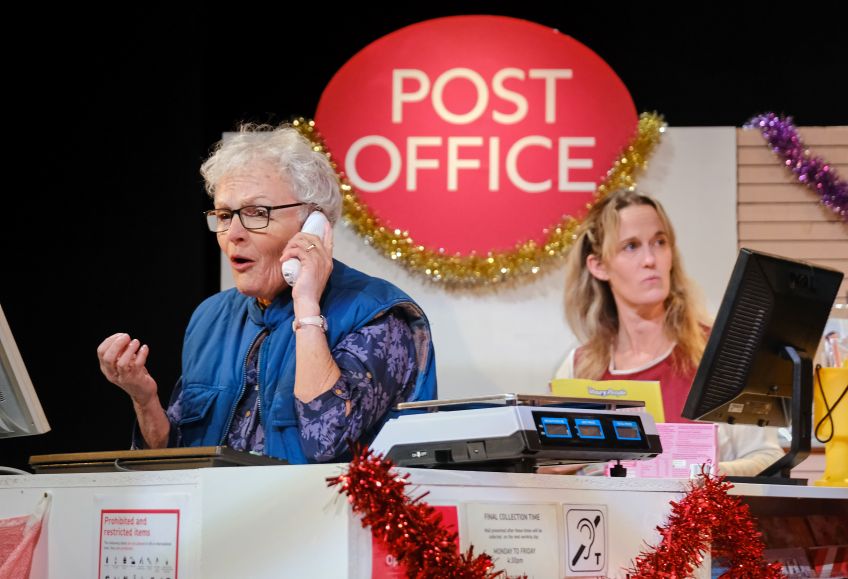
Glitch is a simple word, often implying a small problem, easily ironed out. How terrifying, devastating and soul-destroying, though, is the glitch at the heart of the Post Office Horizon scandal, a relentless, icy glitch that’s snowballed on through decades, cruelly destroying the lives of hundreds of fine people in a colossal, crushing miscarriage of justice that beggars belief.
Commissioned by the University of Reading and written by Zannah Kearns in collaboration with PO workers and legal professionals directly involved, the powerfully engaging 80-minute drama, Glitch, is brilliantly performed by the award-winning Rabble Theatre. Gripping acting, a superbly crafted script, a simple yet busy and versatile set by Caitlin Abbott and wonderful direction from Gareth Taylor and Gemma Colclough do full justice to this story and to the 900 or more honest, conscientious, worthy individuals who have suffered so horribly.
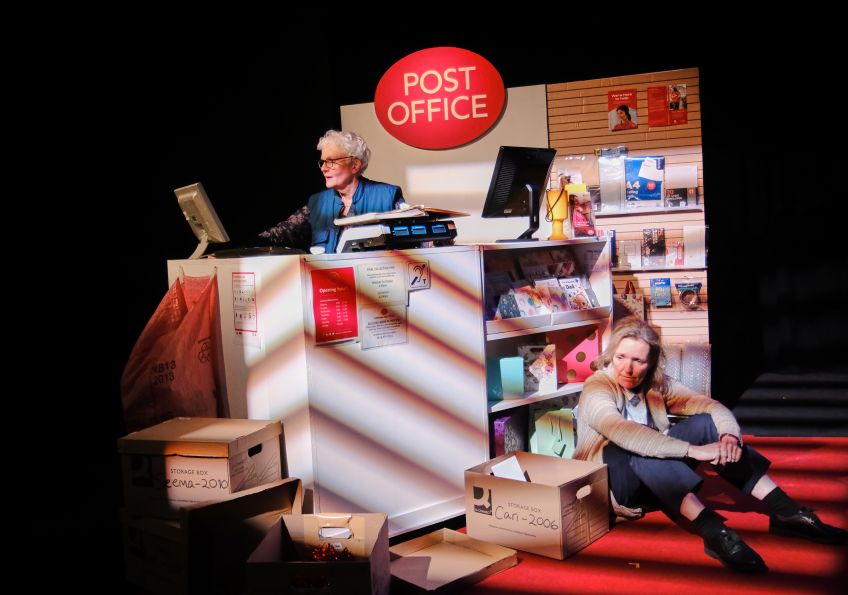
With the story told primarily by Pam Stubbs, sub-postmistress of Barkham PO, events unfold chronologically to the present day from the moment of her very first IT glitch (the glitches relayed via an electrical flash-crash-crunch). Her shop, twenty minutes distant from the offices of Fujitsu who developed the faulty Horizon IT system, might just as well have been a million miles away. Personable and engaging at every moment, Joanne Howorth is magnificent as conscientious, honest Pam, efficient, witty and bravely tenacious. In spite of being hit again and again by unbending accusations of theft of post office money, she picks herself up, takes her medication and soldiers on for justice. She tries and tries to get the IT fault sorted but encounters nothing but deaf, icy ears on “helplines”, and frustrating brick walls of cold humanity in a Kafkaesque world, where all help and explanation is denied her. As recriminations grow, they are eventually believed even in Pam’s own community, even by her friend and co-worker, Nora.
Pam’s story, and that of others in the play, is heart-breaking indeed, yet uplifting sparkle bobs back all the time throughout, created by warm banter, humour and sarcasm, by the very real characters – both warm and cold, by apt lighting and sound choices and by frequent, lively movement that incorporates a glorious, logistical choreography of props and set. Variety is regularly injected with silently enacted scenes that balance wordier ones or with monologues addressed intimately to the audience. Light, shadow and sound are skillfully used, too, with discreet thrums of tension, a disembodied, voice for the judge at court, and radio bursts that enhance authenticity and, like the calendar page, relay the date.
The play opens in Pam’s little PO shop, adorned with Christmas tinsel, where moveable boards and white units are set on a square of red carpet, creating shelves for sweets and magazines and white counters for till and computer. With frequent, delightfully choreographed teamwork, everything can easily revolve, rotate, move or be removed to take us to courtroom, Justice For Postmasters Alliance meetings or evicting us, with Pam, from the premises. The impressively smooth flow of action, characters, props and set is a joy to behold. Besides a hatbox for wedding hats, around a dozen thick, lidded, portable cardboard boxes ingeniously house the props – items of costume, paperwork, ledgers, Christmas crackers, confetti and all else. These boxes, too, constantly reconfigure in choreographies in which the cast slickly open, extract, close, refill, move or remove them. It really is quite something.
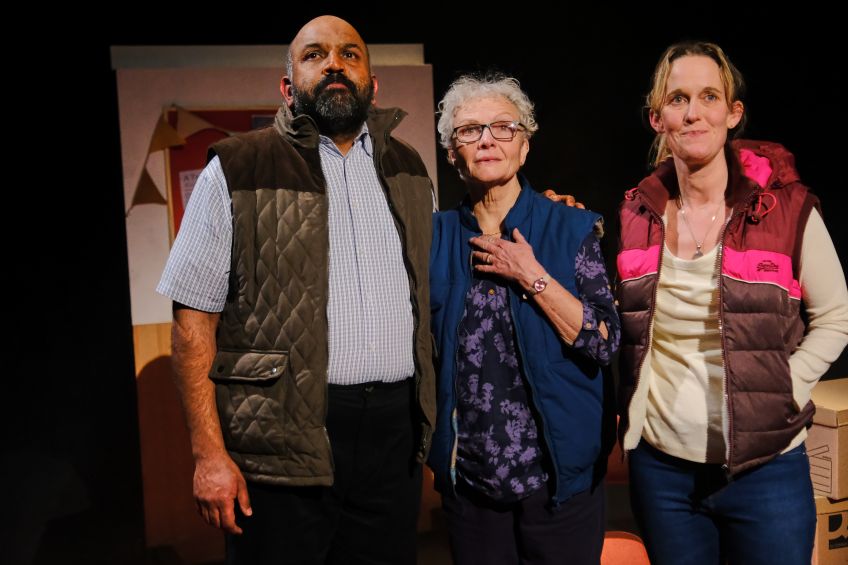
The other three cast members in this fittingly character-driven drama are Laura Pennycard, Naveed Khan and Sabina Netherclift, all likewise outstanding in creating the many other characters who so effectively build this story. With ongoing, slight tweaks to costume, hairstyle, accessories, body language and accent, characters come, go and interact all the while – quirky customers in caps and headscarves, lawyers and prosecutors in gowns (Sabina’s frosty Barrister Swift being particularly chilling), Nora in her tabard, suspicious, narrow-minded IT people like heartless Steve and other suffering sub-postmasters like Alan Bates (now Sir). While Jan relates horrific details of her life in prison, other innocent individuals are persuaded to plead guilty just to avoid prison; a widow relates the harrowing tale of her husband’s suicide, one of more than a dozen suicides, and we hear of the loss and destruction of health, mental and physical, of reputation and of the lives and livelihoods of hundreds and hundreds, many of whom died before ever knowing they’d be vindicated.
As with ITV’s Mr Bates vs The Post Office, also from 2024, the impact of these personal, intimate stories brings home vividly the distressing, far-reaching, very real consequences of that IT glitch and the unbending stance of all those who defended the indefensible system at any cost – at any human cost, that is.
An excellent play. If only it were fiction.
Eileen Caiger Gray